

 Service Model Refresh: The Three-Tier Client Calendar That Does Not Burn You Out
 Service Model Refresh: The Three-Tier Client Calendar That Does Not Burn You Out
 Paige Christofferson | Chief Business Development Officer
Many advisors feel pressure to provide high-touch service to every client all the time. While that’s a worthy goal, the pursuit of it often leads to packed calendars, constant reactive work and teams that struggle to keep up.
Over time, that level of activity can work against the very goal behind it. Advisors are trying to provide better service, but the pace can make it harder to be thoughtful, consistent and proactive.
That’s why the answer is not simply to work harder or add more touchpoints. It is to create a structure that helps advisors direct their time with greater purpose.
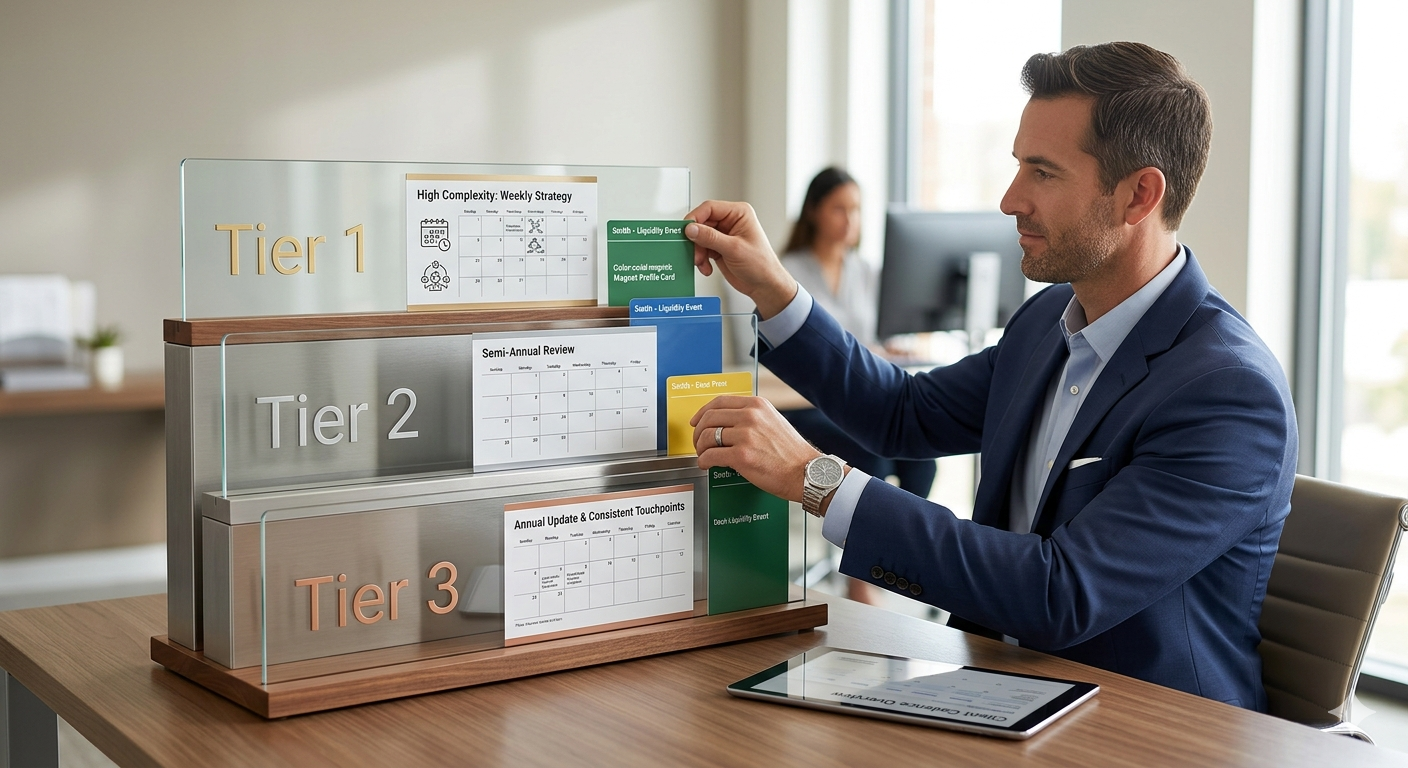
A three-tier service calendar does that by matching each client’s needs to a clear level of service. It gives the team a practical way to decide who needs more attention, what that attention should look like and how to deliver it consistently. Here are three things to think about as you build one:
Start with client complexity, not just revenue.
Group clients by the complexity of their needs, not simply by account size. For example, a business owner going through a liquidity event may need more support than a larger but stable household. A multi-generational family might require more coordination than a high-balance, straightforward portfolio. When tiers reflect the work each relationship requires, the model aligns more closely with reality.
Set a clear cadence for each tier.
After you define your tiers, establish a consistent schedule for client interactions. Top-tier clients might have quarterly meetings, monthly check-ins and proactive outreach around key events. Mid-tier clients could have semiannual meetings with structured updates in between. Foundational clients still receive consistent communication, but in a more streamlined format. The goal is to deliver service that is both consistent and intentional, with a rhythm the team can maintain.
Protect time for the work that makes service effective.
Even the best service model will break down if every hour is booked. Set aside one or two days each week for planning, preparation and follow-through. This is where advice improves and complex situations get worked through. The same discipline should show up behind the scenes. Agendas, follow-ups and workflows should be structured so the team can deliver reliably, while each interaction still reflects the client’s situation, priorities and timing.
A three-tier service calendar brings structure to how advisors allocate time, aligns service with client complexity and creates a cadence the team can actually maintain. More importantly, it shifts the business away from constant reaction and toward more deliberate execution.
That shift shows up in the day-to-day work. The team can plan ahead, prepare for the right conversations and focus their time where it matters most, rather than treating every request as urgent.
That is what makes the approach sustainable: a more reliable experience for clients, more
room for advisors to think and a team that is not constantly running at full capacity.